
|
|
|
|
|
The
History of Jamaica Festival |
|
|||||
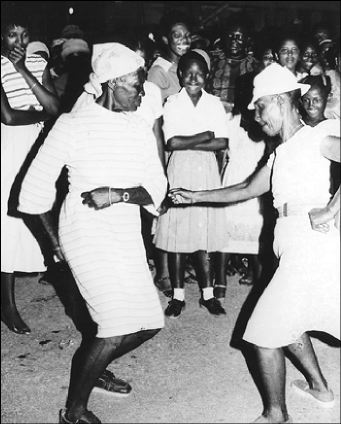
JAMAICA FESTIVAL a national salute to local talent and ingenuity in local vernacular "a bam bam." How appropriate that the phrase introduced to the nation in 1966 by Toots and the Maytals in their winning festival song, can be used to aptly describe Jamaica Festival itself. A major training opportunity for thousands of Jamaicans, Jamaica Festival's mandate was (and still is) to focus attention on "Things Jamaican" Jamaican creativity and cultural awareness across socio-economic levels. As Edward Seaga, then JLP Minister of Development and Welfare, spelled out in his Long-term Development Plan for Jamaica (1963-8), festival was integral to national development because it was a way of giving Jamaicans a sense of who we are, and what our history and culture is all about. These concerns took on added importance during that immediate post-Independence period. Seaga remembers the 1962 Independence Festival celebrations which he helped coordinate and which laid the groundwork for the real start of festival as we know it today, as being aimed at commemorating a substantial achievement with the excitement and enthusiasm it deserved. Unlike other countries where the sheer achievement of independence was itself an occasion for joyous celebration, marked by a specific day, Jamaica's independence was achieved gradually and a convenient day near to Emancipation Day was chosen (the first Monday in August) to mark Independence. There was therefore a need he said, for "something to mobilize the spirit of the people". That something became Jamaica Festival, the first of which was really held in 1963, on the anniversary of the previous year's Independence celebrations. Festival has since been staged every succeeding year without fail. Although popular support for it has varied at times over the past 4 decades, it has nevertheless become part of the formal Jamaican development landscape a visible and tangible expression of the vitality and range of Jamaican culture and creativity. In a 1968 presentation to the House, Seaga sought to institutionalise and formalise festival proceedings by proposing to establish the Jamaica Festival Commission. The Act was passed unanimously. In 1980 another Bill was passed in Parliament making The Festival Commission the Jamaica Cultural Development Commission (JCDC), the name by which it is known today, and a name well suited to its work which by then had become entwined with cultural development. Today, the JCDC is also responsible for organizing aspects of the country's annual independence celebrations. |
||||||
|
In the 1930s, a decade of significant social upheaval and change on the island, Jamaica Welfare Ltd. was established and village competitions that included art, craft, plays, preserves and traditional dance, began. In addition, Mico graduates, exposed to music and art forms, took that influence with them as they began their teaching assignments around the island, contributing to the growth of a national art form. Yet, in spite of claims to be representative of the entire island, these contests remained largely Kingston-based until the 1946 Portland Festival. This week-long event, a spontaneous effort organized by local citizens that included bringing schools and adults together to allow for eliminations at the inter-school and inter-village levels, marked the beginning of a movement. St. Catherine followed suit in 1949, St. Ann in 1951 and Manchester in 1954. In 1955, the movement evolved to include celebrations that were not only islandwide but year-long. For the first time parish level competitions led up to national competitions with national finals held in Kingston. The popular three-hour long Jamaica Bandwagon with its float parade organised by Eric Coverly was introduced. Co-ordinated by arts stalwart Robert Verity and presented in all parish capitals, the bandwagon took popular entertainment to the people at street corners and in the villages. Bennett helped organise arts celebrations in 1960 and 1962 as part of the Independence Festival, and went on to be awarded the Order of Distinction in 1977 for his outstanding contributions in the field of Jamaican theatre. By the early 1960s, however, no central organisational structure to ensure the repetition, growth and increasing Jamaicanisation of such events was yet in place. That development came in 1963, when following the success of the Independence Festival, such an overall organisation was introduced. A small unit known as the Festival Office was established in the Ministry of Development and Welfare under Seaga's leadership, and in 1964, Hugh Nash, a man whose name would become synonymous with Jamaica Festival over the years, was appointed director. Nash held that post from 1964-67, in 1969, from 1974-77 and 1981-83. In 1983 he, too, was awarded the Order of Dis-tinction for his contributions to the development of festival. When asked to reflect
on the development of festival, Nash vividly recalls the enthusiasm of
the thousands of volunteers and the non-partisan nature of their involvement.
Each parish was divided into Festival Zones with a committee for each
zone charged with encouraging entries in dance, music, speech and the
culinary arts. (It wasn't until 1966 that the popular festival song competition
was added). Nash explained that the timing of festival during the summer linked it naturally to efforts to stimulate travel to the island amongst non-Jamaicans and Jamaicans living abroad. It also nicely coincided with the annual Denbigh Agricultural Show which festival performers and queens often attended to add a cultural element to the proceedings. When asked to reflect on the development of festival, Seaga feels that festival has in many ways lived up to his dream of "maintaining, preserving and developing our cultural resources, the unique natural, creative talents which belong to our people, having opened the doors for young people around the country in all fields of creativity and given them a means of expression." |
||||||
|
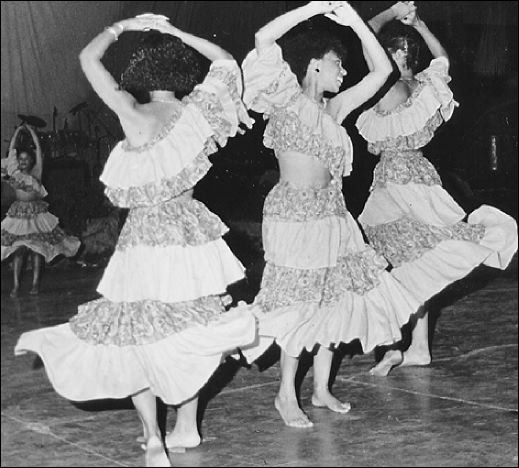
In the 40 years since its inception, thousands of Jamaicans have benefited from Jamaica Festival programmes. The Festival Commission and now the JCDC has exposed and nurtured the talents of renowned cultural artistes as Bob Marley, Mervyn Morris, Kapo, David Boxer, Barrington Watson, Lennie Little-White, Stephen "Cat" Coore, Joan Andrea Hutchinson, Fae Ellington and Susan Alexander. Today, the JCDC falls under the auspices of the Ministry of Local Government and Community Development. The administrative structure still maintains a large volunteer-base particularly at the parish level where a JCDC officer is appointed to oversee activities. Total JCDC staff numbers over 100 and includes National Youth Service (NYS) members and holiday workers. Current programmes reap the benefit of the early Festival movement's attempt to establish a comprehensive presentation of all the arts imaginable, from the graphic to the culinary, to the performance and the literary. As a result, they can now be called traditional festival events. These include Art and Photography, Craft, Literary Arts, the National Mento Band competition, Dances, Speech (in standard and Jamaican English), Drama, Music, the National Festival Song and Gospel Song competitions as well as the Miss Jamaica Festival Queen Contest. The best of the Festival of the Performing Arts (dance, speech, drama and music) is showcased in the JCDC's annual Mello Go Roun' which this year will be staged in Montego Bay in addition to Kingston. The JCDC also presents an annual exposition of art, craft, traditional music, dance, games and food at the National Mento Yard. Current Executive Director, Marcia Hextall, the fifth female to hold that post, is excited at the activities planned for this special 40th year, particularly the float parade an event that last took place in the 1980s. The parade of 19 floats, 10 costume groups and 12 effigies will begin at Devon House on Independence Day and end up at the National Stadium. Also new this year is the 'Festival Train' a road show set to travel across the island from Sunday, July 28 to Friday, August 2 stopping at 30 locations, featuring the finalists in many of the competitions. Parishes will have at least one matinee and one night event. Another key event is the 'Oldies Festival Song Showcase' to be held in Morant Bay and Montego Bay featuring the songs from the first 10 years Toots and the Maytals will headline. Additional highlights of this year's independence celebrations include the 'Grand Send-off' on Sunday, July 28 in Morant Bay and the final "Ol' Time Independence Street Dance" in Half-Way Tree on Wednesday, July 31. Forty years later, what has now become a traditional report to the nation continues. |
||||||
|
|
||||||
|
Rebecca Tortello |
||||||
|
Coming August 12: The series explores Captivated Sir Hans Sloane And His Passion For Jamaica |
||||||
|
A Jamaica
Gleaner Feature originally posted July16, 2002
Copyright 2001-2 . Produced by Go-Jamaica.com |