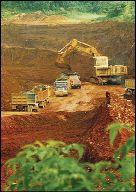
Bauxite mining in Jamaica. - FILE
NEW YORK (Reuters):
ALCOA INC., the world's largest aluminium producer, said yesterday that second-quarter profit soared on higher metal prices and strong aerospace demand, although revenue fell below Wall Street expectations and the stock fell.
Alcoa is a partner with the Government of Jamaica in Clarendon Alumina Production Limited which carries out bauxite mining and alumina refining at Jamalco in Clarendon.
Net earnings for Alcoa were US$744 million, or 85 cents per share, compared with US$460 million, or 52 cents per share in the same quarter last year, the Pittsburgh-based company said.
LABOUR CHARGES
Earnings from continuing operations were 86 cents per share. Analysts on average were expecting the company to earn 86 cents, according to Reuters Estimates.
The results included a charge of about four cents per share for costs associated with a new four-year labour agreement with workers belonging to the United Steelworkers Union.
In its earnings release, Alcoa said revenue in the quarter rose to US$7.96 billion from US$6.70 billion a year earlier, but lower than analyst expectations of $8.14 billion.
In after-hours trading Alcoa stock fell to US$32.61 from US$33.41 on the New York Stock Exchange.
The company said results were driven by higher LME (London Metals Exchange) prices and strong market demand in aerospace, building and construction, as well as commercial vehicles and can sheet markets.
ROSE TO PEAK
Aluminium started the quarter, in April at US$2,520 per tonne and rose to hit a peak on May 11 of US$3,185. It closed on Monday at US$2,570.
Last month, unionised workers ratified a new labour contract at Alcoa after the company made contingency plans for a strike.
The four-cent per share charge included payment of a signing bonus of $1,500 to each of the approximately 9,000 Alcoa workers whose acceptance of the pact averted a threatened strike at
the world's largest aluminium producer.
With high aluminium prices translating into bigger potential profits for Alcoa, the last thing the company wanted was a crippling labour strike. In 1986, Alcoa management kept operations going during a six-week work stoppage.